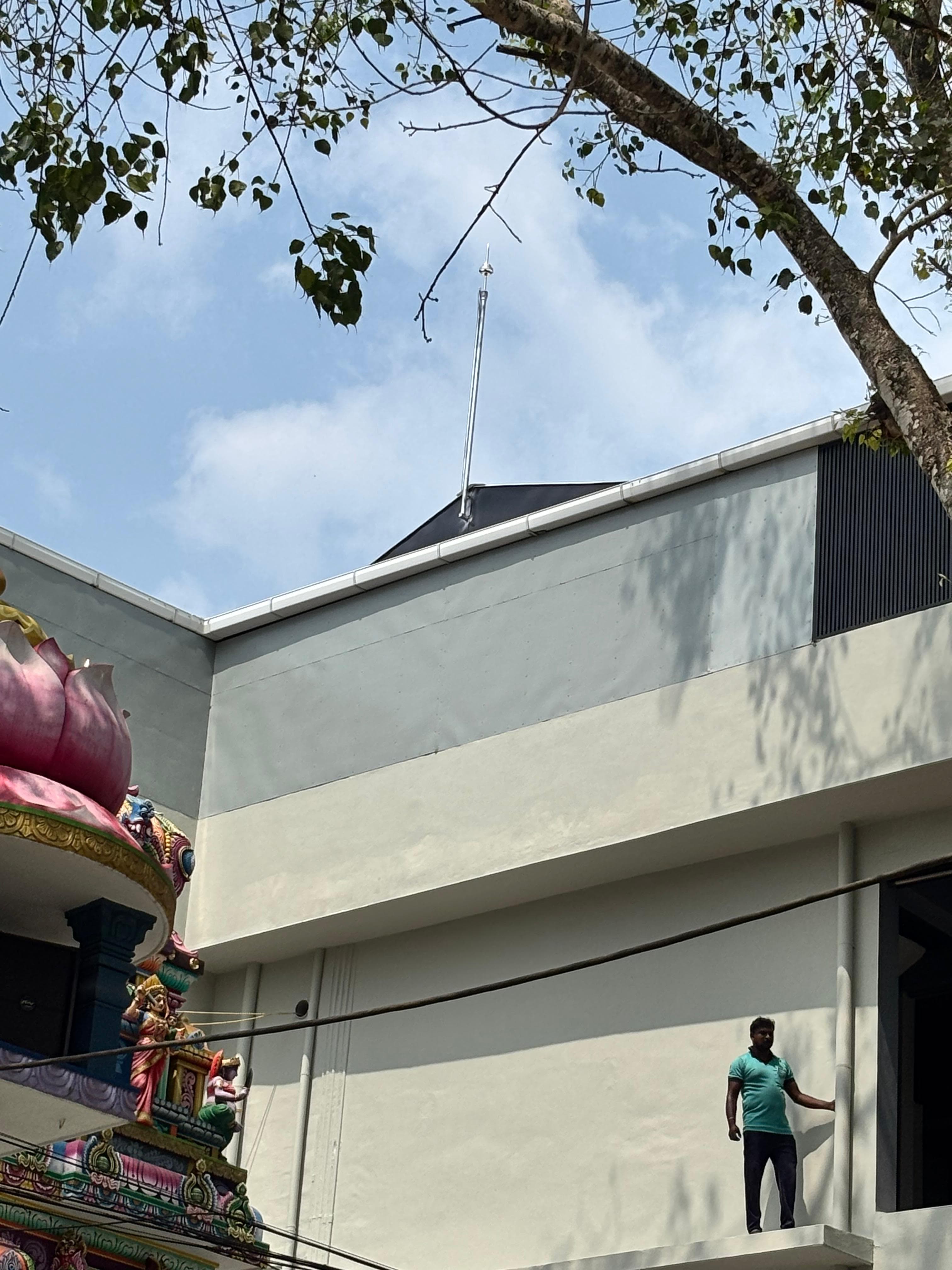
How an ESE lightning arrester works
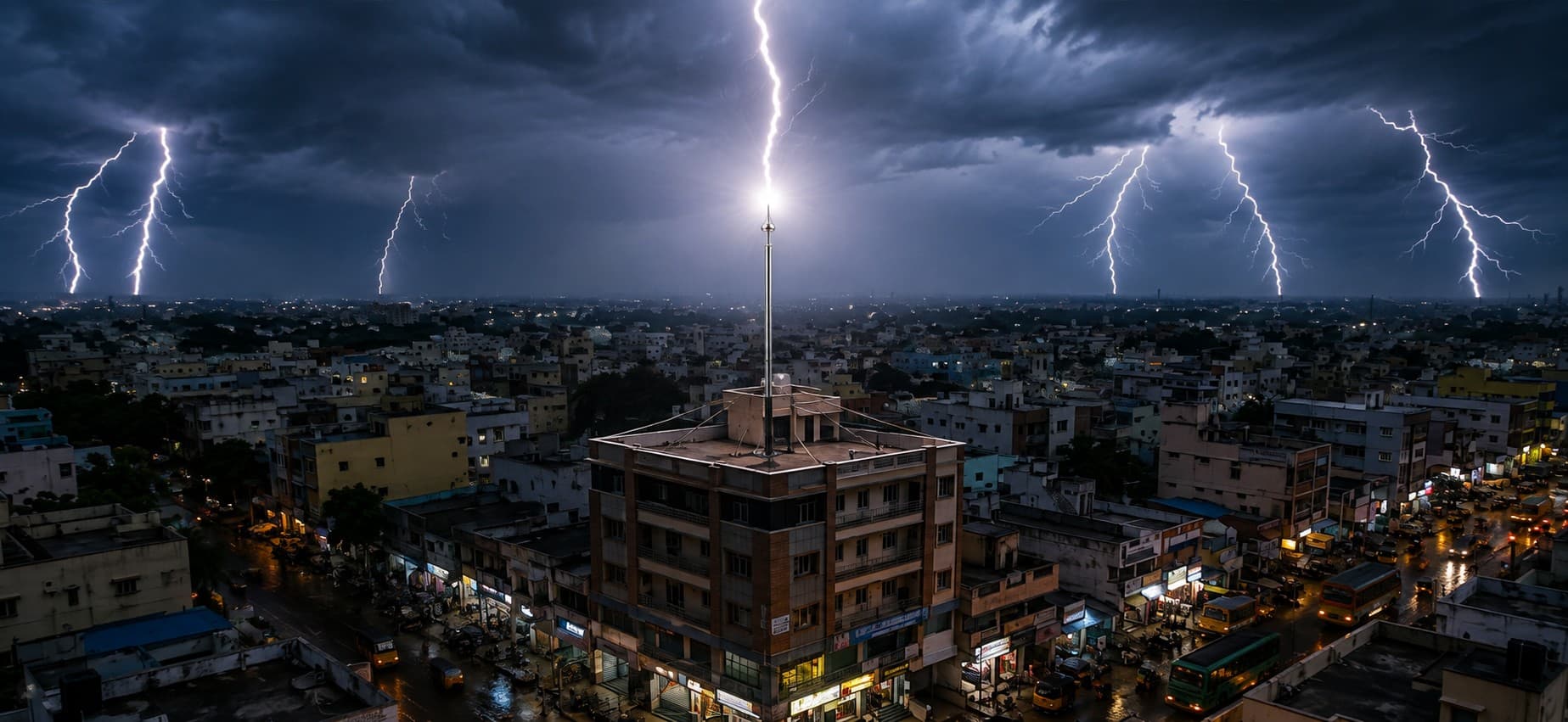
An Early Streamer Emission (ESE) lightning arrester is an air terminal designed to launch its upward streamer earlier than a simple rod under the same storm conditions. That time advance — called ΔT and measured in microseconds — lets it intercept lightning over a much larger area, so one ESE mast can protect a zone that would otherwise need many conventional rods.
The TOPBAS SIRIUS and UMBRAECO arresters supplied by Henel Engineers are non-electronic: they need no battery or external power source, which keeps maintenance simple.
Protection radius and protection levels
Standards such as NF C 17-102 define four protection levels, from Level I (most stringent, smallest radius) to Level IV (least stringent, largest radius). The protection radius of an ESE arrester depends on the protection level, the height of the arrester above the structure and its ΔT.
The level is chosen from a lightning risk assessment of the structure, which is why we design every ESE installation for the specific site rather than quoting a radius in isolation.
ESE lightning arresters we supply
- TOPBAS SIRIUS — non-electronic ESE · ΔT 60 μs · 304L stainless steel · protection radius up to 107 m (5 m mast, Level IV) · 200 kA tested (10/350 μs) · NF C 17-102, UNE 21186, TS EN 62561.
- UMBRAECO — non-electronic ESE · ΔT 10 µs · protection radius up to 51 m (Level IV) · designed and tested to NF C 17-102 (2011) · CE certified · no battery or external power.
Where ESE lightning arresters are used
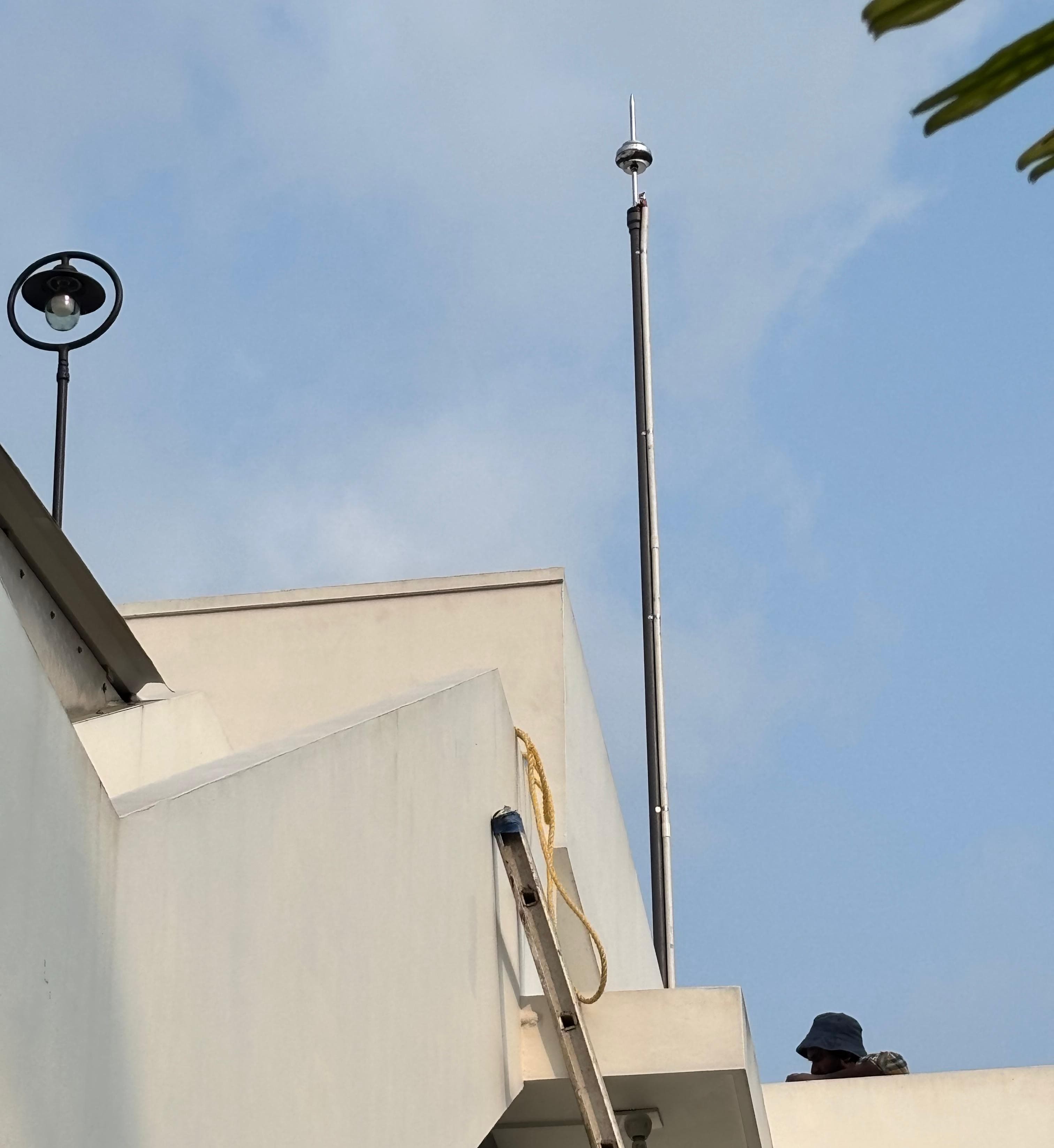
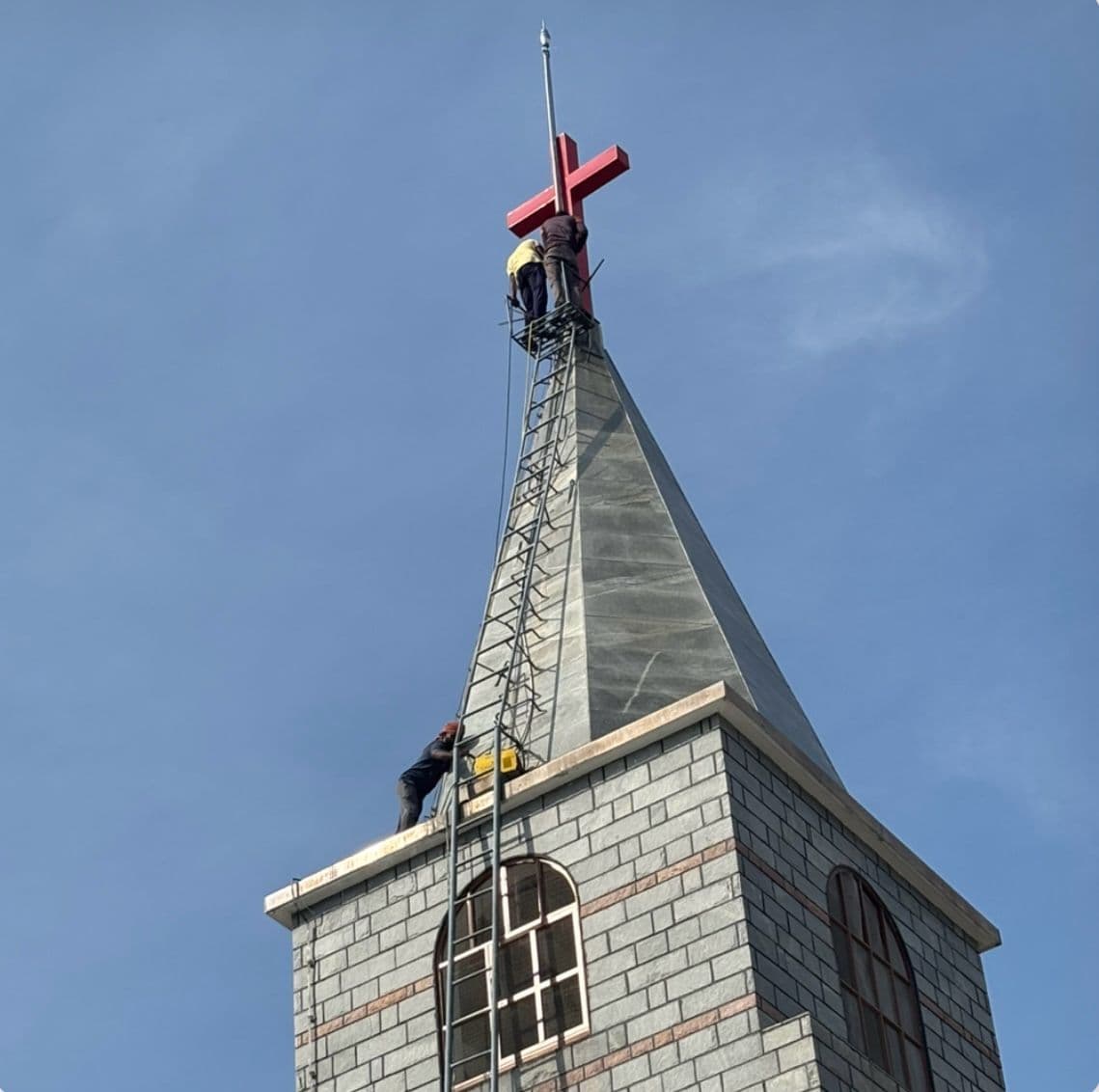
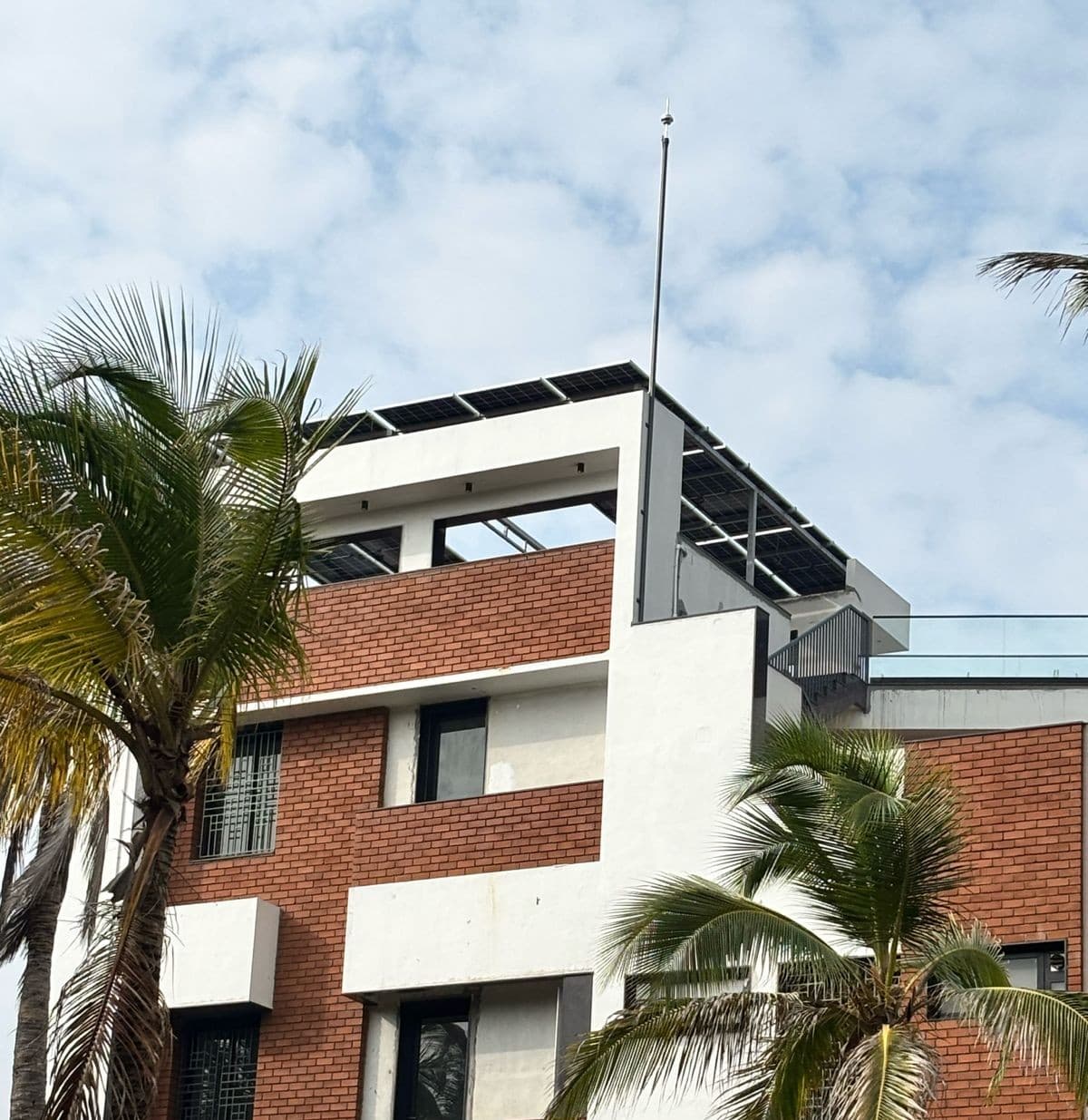
ESE lightning protection suits structures where a large area must be covered from a single point: factories, warehouses, commercial buildings, communication towers, campuses and infrastructure facilities. Our field installations also include temples, church steeples, buildings under construction and residential rooftops with solar panels.