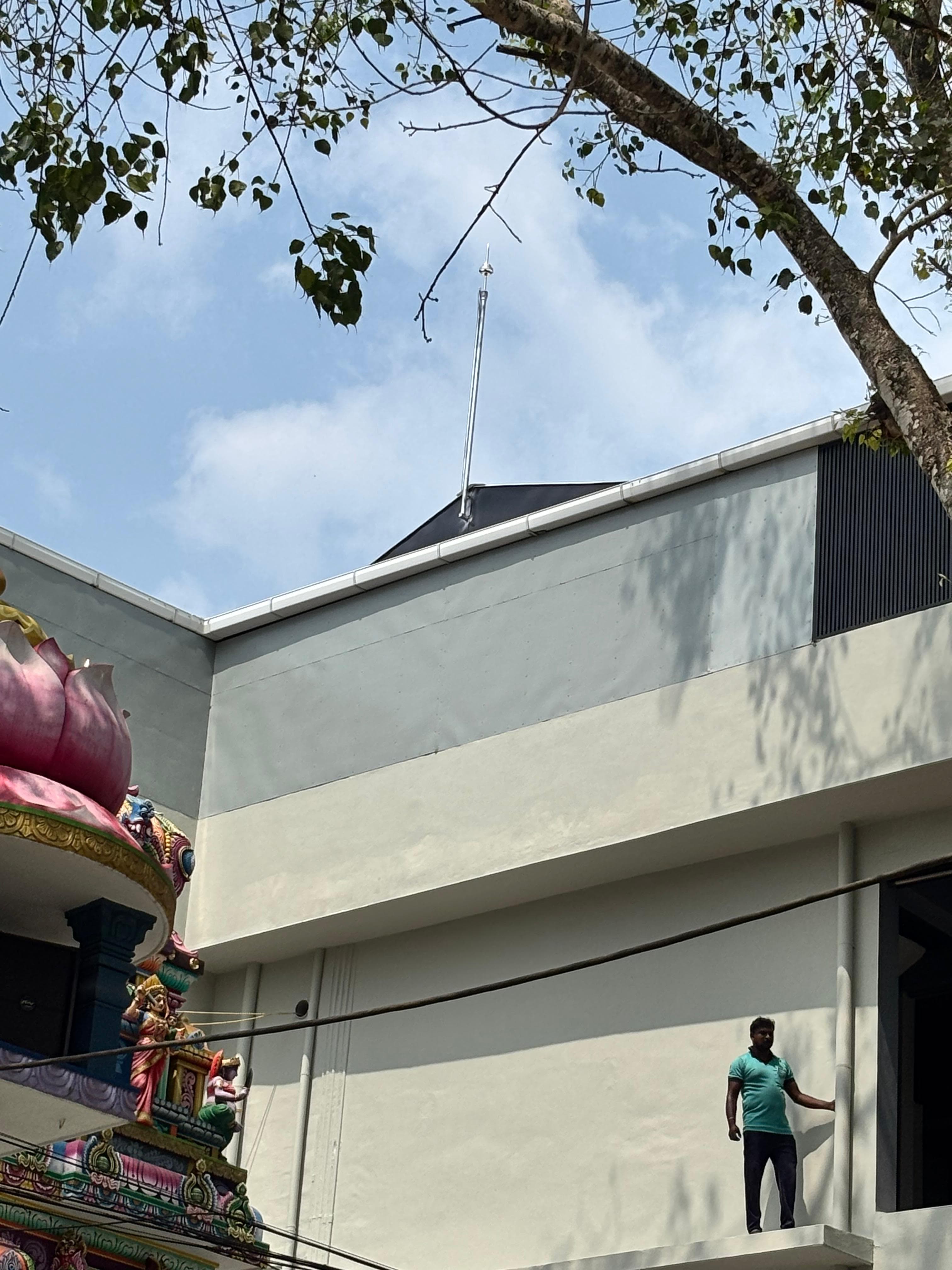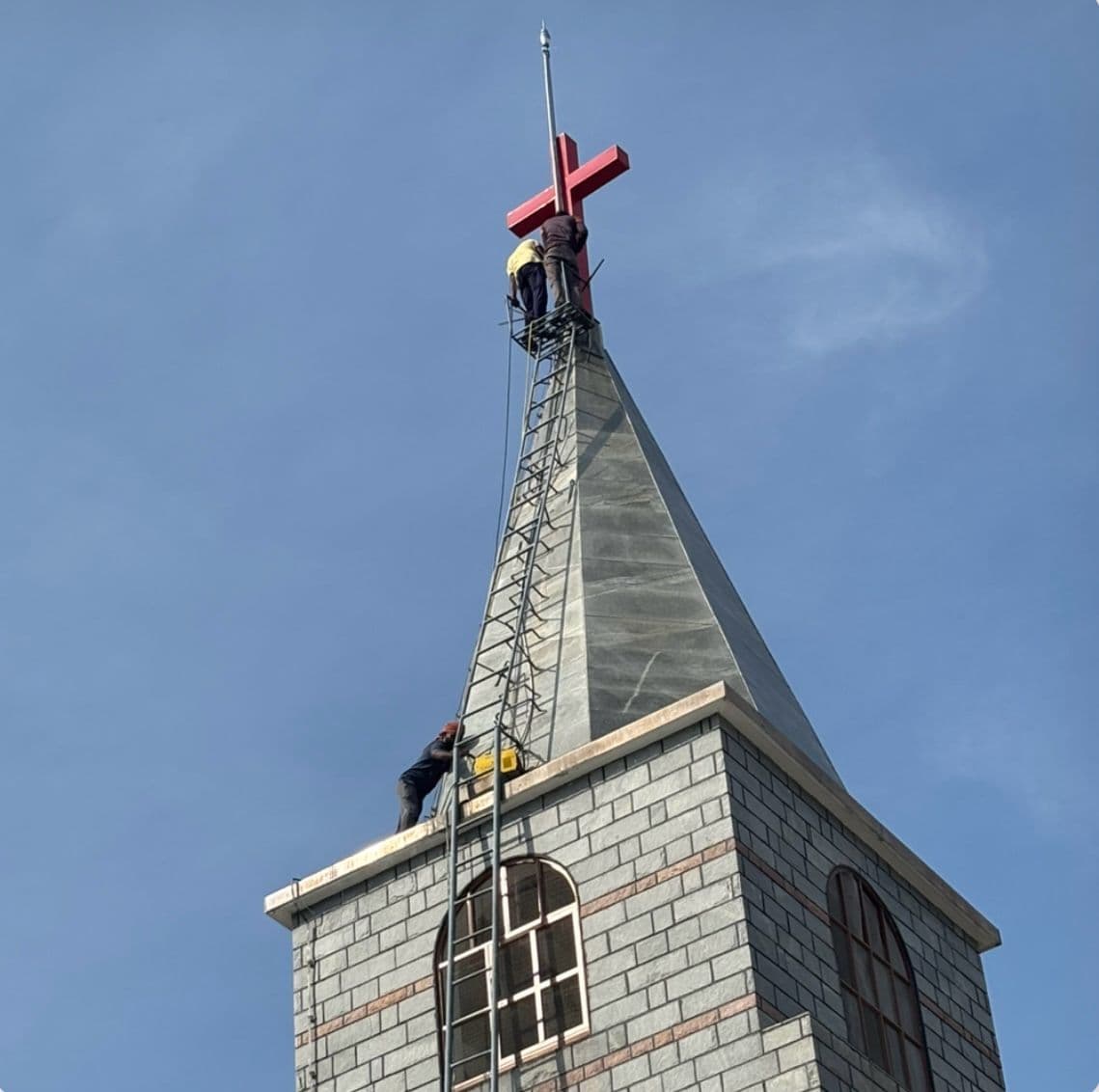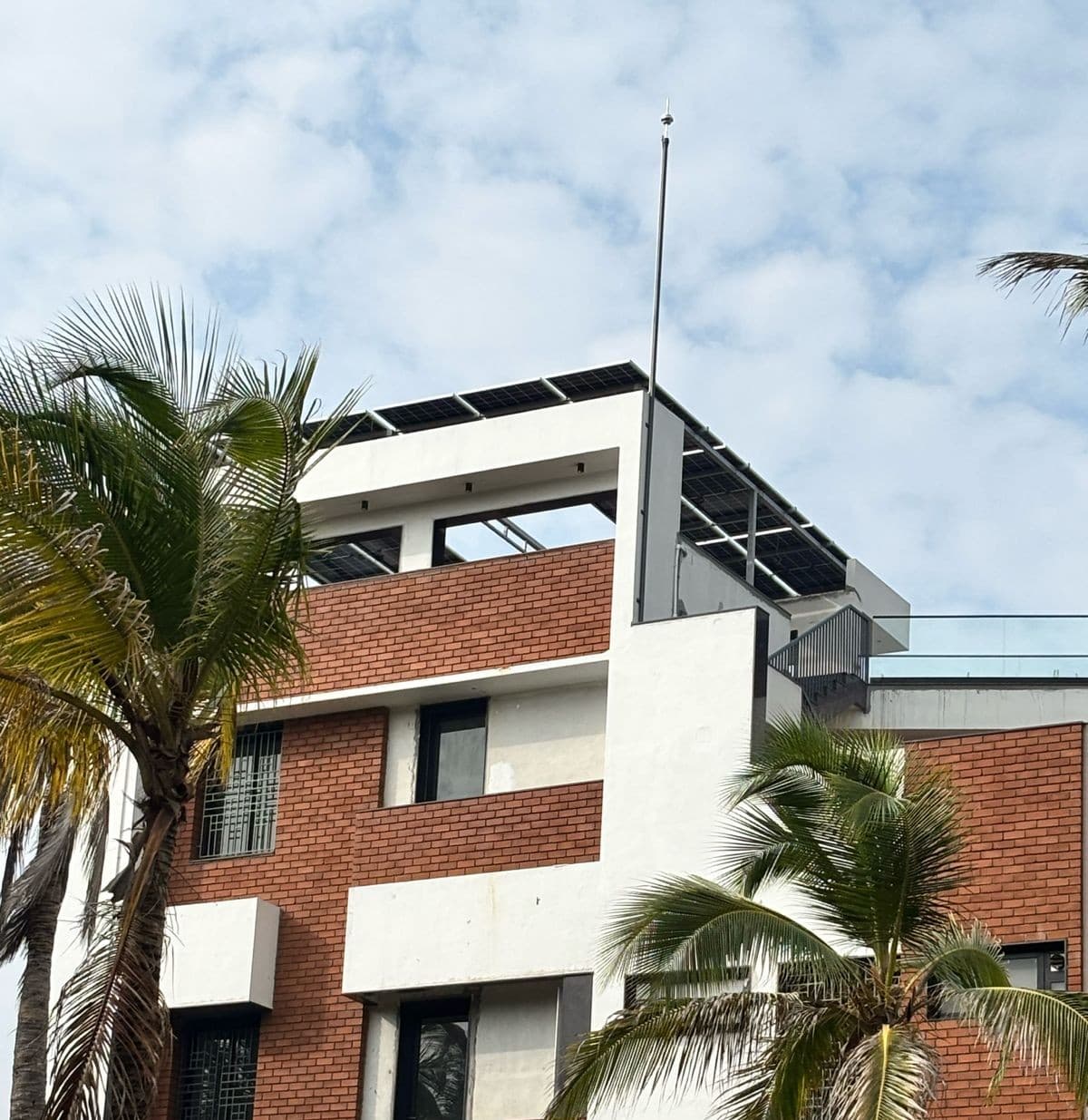
Lightning arrester mast installed on a residential building rooftop with solar panels
Renewable Energy Protection

Lightning Protection & Earthing for Solar Panels

Rooftop solar panels sit in the most exposed part of a building and are wired to inverters and sensitive electronics. Henel Engineers Pvt. Ltd. supplies and installs the lightning arresters, earthing and surge protection that keep solar installations — and the buildings beneath them — protected.

Up to 107 m

ESE protection radius from one mast

Type 1 + 2

Surge protection available

Copper & GI

Earth rods in 1–3 m lengths

Since 1999

Lightning protection experience

Why solar installations need lightning protection

Solar arrays are mounted on rooftops and open ground, often the highest and most exposed point of a site. A direct strike can damage panels and structures, while surges induced by nearby lightning can travel along cables and destroy inverters and monitoring electronics.

Protection works in three layers: air terminals that intercept strikes, an earthing system that dissipates the current, and surge protection devices that protect the electrical equipment.

Lightning arresters for solar rooftops

Air terminals are positioned so that the solar array lies inside the zone of protection. Because an ESE lightning arrester covers a large radius from a single mast, it can protect a whole rooftop array without a forest of rods across the roof. Henel Engineers has installed lightning arrester masts on residential rooftops with solar panels.

Solar earthing

Module mounting structures, equipment and the lightning protection system all need reliable earthing. We supply and install earth electrodes, earth pits and earthing materials — copper bonded and GI earth rods, CARBOMAXX earthing compound and polyplastic or FRP earth pit covers.

Surge protection for solar systems

Surge protection devices protect the electrical installation from transient overvoltages. Every SPD must be selected for where it is installed — the AC side of an inverter and the DC side of a solar array have different requirements — so SPD selection is part of the design.

Solar Lightning Protection & Earthing — FAQs

Answers to the questions customers ask us most.

Do solar panels need a lightning arrester?

Solar panels are usually the most exposed part of a building, so lightning protection is strongly recommended where a risk assessment shows a strike risk. An air terminal places the array inside a zone of protection, with earthing and surge protection completing the system.

Will a lightning arrester shade my solar panels?

A lightning arrester mast is slim and is positioned during design to protect the array while keeping shading to a minimum. Because one ESE arrester covers a large radius, fewer masts are needed than with conventional rods.

What is solar earthing?

Solar earthing connects the solar mounting structures and electrical equipment to a low-resistance earth electrode, protecting people and equipment from fault and lightning currents. Henel Engineers supplies and installs earth rods, earthing compound and earth pits.

Has Henel Engineers installed lightning protection on solar rooftops?

Yes. Henel Engineers’ field installations include a lightning arrester mast on a residential building rooftop with solar panels.

How do I get a quote for solar lightning protection?

Call +91 94432 82312 or +91 94436 92711, chat on WhatsApp at +91 94432 82312, email henelkkla@gmail.com, or use the quote request form on the contact page.

Get in Touch

Ready to Protect Your Assets?

Whether you need a complete lightning protection system or professional windmill maintenance, our team is ready to discuss your requirement.